Why WebAssembly is the Future of Edge Computing
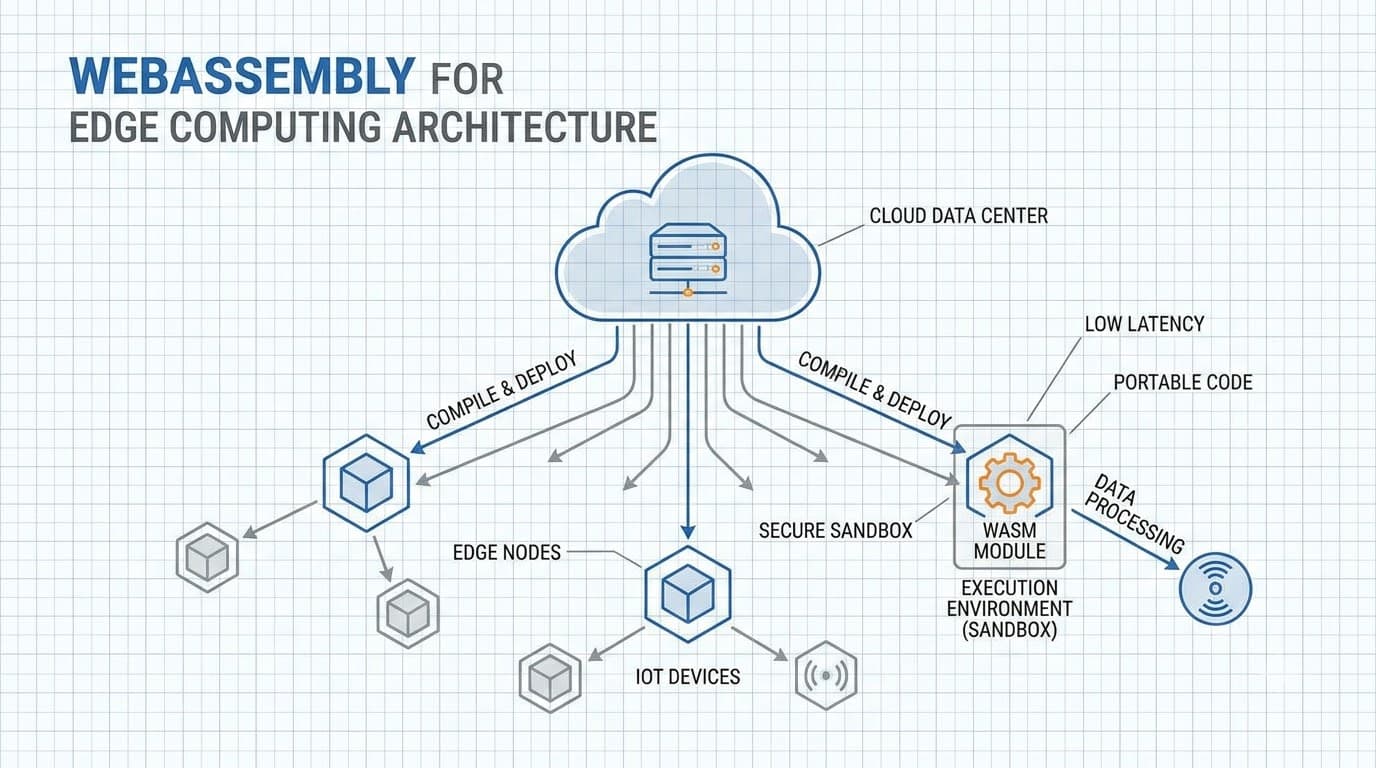

Table of Contents
The edge computing paradigm has rapidly evolved over the past few years, transitioning from a mere CDN caching layer to a fully-fledged compute environment running global serverless applications. As the demand for ultra-low latency and scalable serverless workloads has surged, the underlying technologies powering the edge have had to adapt. Enter WebAssembly (Wasm) — initially designed for the browser, this binary instruction format has quietly become the cornerstone of modern edge computing architectures.
In this comprehensive exploration, we’ll dive deep into why WebAssembly is perfectly suited for the edge, how it solves the infamous "cold start" problem, and why major cloud providers and edge networks are betting heavily on Wasm to power the next generation of serverless compute.
A Brief History: From Browser to Backend
WebAssembly was created with a clear goal in mind: to enable high-performance applications to run on web pages without compromising security or portability. It allowed developers to write code in languages like C, C++, and Rust, compile it to a highly optimized binary format, and execute it at near-native speeds directly in the browser.
However, the defining characteristics of WebAssembly — its secure sandbox, incredibly fast execution, hardware independence, and lightweight footprint — made it highly attractive for environments beyond the browser. The introduction of the WebAssembly System Interface (WASI) provided a standardized way for Wasm modules to interact with the underlying operating system (such as reading files or opening network connections), effectively untethering WebAssembly from the web and bringing it to the server.
The Edge Computing Challenge
Edge computing distributes application logic closer to the end user by deploying code to servers located at the "edge" of the network, typically within CDN points of presence (PoPs). This architecture drastically reduces latency and improves overall performance.
However, running compute at the edge presents unique challenges:
- Resource Constraints: Edge nodes must handle tens of thousands of concurrent requests across hundreds of different tenants. Running a full virtual machine (VM) or even a standard Docker container for every request is highly inefficient and resource-intensive.
- Cold Starts: Traditional serverless architectures (like AWS Lambda) often rely on microVMs or containers. When a function hasn't been invoked for a while, spinning up a new container introduces noticeable latency, commonly known as a "cold start." At the edge, where the entire point is low latency, a 500ms cold start is unacceptable.
- Security and Isolation: Multi-tenant edge nodes run code from numerous untrusted customers. Ensuring strict isolation between these workloads is non-negotiable.
How WebAssembly Solves the Edge Dilemma
WebAssembly elegantly addresses all of the challenges associated with edge computing, making it the ideal runtime for this highly demanding environment.
1. Near-Instant Cold Starts
The most profound impact of WebAssembly at the edge is its elimination of the cold start problem. Unlike Docker containers, which require spinning up an entire OS environment, or microVMs that require booting a lightweight kernel, a WebAssembly module is simply a compiled binary.
Wasm runtimes, such as Wasmtime or Lucet, can instantiate a new WebAssembly module in a matter of microseconds — often less than 1 millisecond. This means edge functions can be spun up completely on demand for every single request, eliminating the need to keep idle instances warm and ensuring consistently ultra-low latency for end users.
2. Extremely Lightweight Footprint
WebAssembly modules are incredibly small. A typical edge function compiled to Wasm might be only a few kilobytes in size. Furthermore, because Wasm modules do not require their own operating system or large language runtimes (like Node.js or Python), they consume an astronomically smaller memory footprint compared to traditional containers.
This lightweight nature allows edge providers to pack thousands or even tens of thousands of distinct Wasm modules onto a single edge server, maximizing resource utilization and making edge compute economically viable at a massive scale.
3. Uncompromising Security and Sandboxing
Security is built into the fundamental design of WebAssembly. Wasm modules execute in a memory-safe, sandboxed environment. The runtime enforces strict isolation; a Wasm module cannot access memory outside of its own linear memory space, nor can it interact with the host operating system without explicit permission through WASI.
This default-deny security model is perfect for multi-tenant edge environments. Edge providers can safely run code from entirely different customers side-by-side within the same process, confident that the Wasm sandbox will prevent any malicious or accidental cross-tenant interference.
4. Language Agnosticism and Portability
WebAssembly is an execution target, not a programming language. Today, developers can write edge functions in Rust, C++, Go, AssemblyScript (a subset of TypeScript), Python, and an ever-growing list of other languages.
Once compiled to Wasm, the resulting binary is completely platform-agnostic. It can run on an x86 server, an ARM-based edge node, or even directly in the user's browser without requiring any modifications. This "write once, run anywhere" capability dramatically simplifies deployment pipelines and reduces vendor lock-in.
The Ecosystem is Maturing Rapidly
The shift towards WebAssembly at the edge is not merely theoretical; it is actively happening right now. Major platforms like Cloudflare Workers, Fastly Compute@Edge, and Netlify Edge Functions natively support or are entirely built upon WebAssembly and V8 isolates (which share similar lightweight characteristics).
Furthermore, the CNCF (Cloud Native Computing Foundation) has heavily embraced WebAssembly, with projects like WasmEdge and Spin driving standardizations and tooling to make building and deploying Wasm applications easier than ever. The Component Model, a recent development in the Wasm ecosystem, promises to allow different Wasm modules written in different languages to seamlessly communicate with each other, paving the way for highly modular and composable edge applications.
What's Next?
As we look toward the future, the role of WebAssembly at the edge will only expand. We will likely see more complex workloads migrating to the edge, including real-time AI inference, highly distributed databases, and complex stateful applications.
WebAssembly is doing for edge computing and serverless what Docker did for cloud infrastructure. By providing a secure, blazingly fast, and incredibly lightweight runtime, WebAssembly has officially unlocked the true potential of the edge. For developers looking to build highly performant, global applications, understanding and leveraging WebAssembly is no longer optional — it is the new standard.
You Might Also Like
Free In-Browser Developer Tools
Clean AI CLI logs, build cron expressions, decode JWTs, and calculate chmod permissions offline.
Related Articles
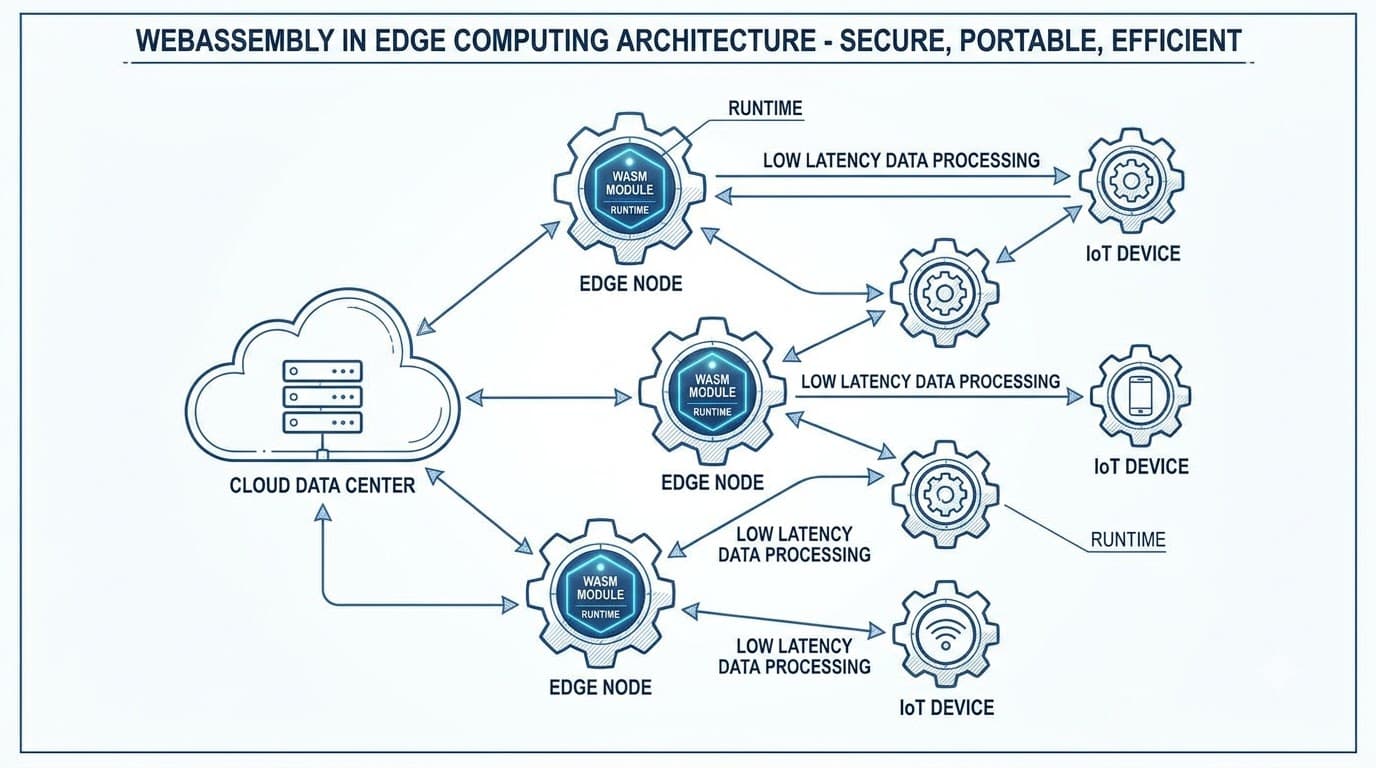
The Future of WebAssembly in Edge Computing: Architecture, WASI 0.2, and Benchmarks
Exploring how WebAssembly (Wasm) and WASI 0.2 are redefining edge computing with microsecond cold starts, capability-based security, and Rust components.
Read more
Rust for Frontend Developers: A Practical Transition Guide
Why frontend developers are increasingly adopting Rust for tooling and WebAssembly, and how you can transition your mental model from JavaScript/TypeScript.
Read more
AWS Lambda Cold Starts in 2026: Mitigation Strategies
Cold starts have always been a challenge in serverless environments. Discover the most effective strategies for mitigating AWS Lambda cold starts in 2026, including SnapStart, provisioned concurrency, and language choice.
Read more