WebAssembly (Wasm) Beyond the Browser: A New Era of Compute


WebAssembly (Wasm) started as a way to bring near-native performance to web browsers. By providing a binary instruction format for a stack-based virtual machine, it allowed developers to run languages like C, C++, and Rust on the web alongside JavaScript. However, the true potential of Wasm extends far beyond the browser. Over the last few years, WebAssembly has emerged as a formidable force in backend systems, edge computing, plugin architectures, and even as a potential successor to traditional containerization like Docker. In this highly technical deep dive, we will explore the architecture of server-side WebAssembly, the WebAssembly System Interface (WASI), the component model, and why Wasm is poised to become the universal runtime for cloud-native applications.
The Architecture of Server-Side WebAssembly
At its core, WebAssembly is an abstract machine architecture. It does not make assumptions about the underlying hardware or operating system. Instead, it provides a safe, portable, and fast runtime environment. When running in the browser, Wasm is restricted by the JavaScript sandbox and interacts with the DOM through JavaScript bindings. When running outside the browser, these restrictions are lifted, but safety remains a paramount concern.
Server-side Wasm runtimes, such as Wasmtime, Wasmer, and WasmEdge, use Just-In-Time (JIT) or Ahead-Of-Time (AOT) compilation to translate WebAssembly bytecode into native machine code. This compilation process ensures that Wasm modules execute at near-native speed. Unlike traditional virtual machines (like the JVM or the CLR) that require a heavy runtime, Wasm runtimes are incredibly lightweight. A Wasm module can be instantiated in microseconds, making it ideal for high-density, low-latency environments like serverless functions and edge nodes.
Security and Isolation
One of the most compelling features of Wasm is its default-deny security model. A Wasm module executes in a strictly isolated memory space. It cannot access the host operating system's filesystem, network, or environment variables unless explicitly permitted. This linear memory model ensures that buffer overflows or malicious code within the Wasm module cannot compromise the host system.
This isolation makes WebAssembly an excellent choice for running untrusted code. For example, cloud providers can host thousands of tenant functions on a single machine without the overhead of hardware-level virtualization (VMs) or the security risks associated with OS-level virtualization (containers).
Enter WASI: The WebAssembly System Interface
If Wasm is a CPU architecture, it needs an operating system to interact with the outside world. This is where the WebAssembly System Interface (WASI) comes in. WASI is a modular set of standard APIs designed to provide Wasm modules with safe, capability-based access to system resources such as files, networks, and clocks.
Capability-Based Security
WASI employs capability-based security. Instead of granting a Wasm module blanket access to the filesystem (e.g., /), the host explicitly passes file descriptors to the module upon instantiation. If a module needs to read from /var/log and write to /tmp/data, the host provides capabilities specifically for those directories. The module simply cannot access anything else.
This granular control is a significant improvement over traditional Linux containers, which often rely on complex user namespaces, seccomp profiles, and AppArmor/SELinux policies to achieve similar isolation. With WASI, the security boundary is drawn tightly around the module itself.
The Evolution of WASI
WASI is actively evolving. Early versions (preview 1) focused on basic POSIX-like capabilities. The upcoming WASI Preview 2 introduces a more abstract, component-based model. It moves away from POSIX assumptions (which are heavily tied to Unix-like OS concepts) and embraces a more versatile, high-level interface suitable for cloud-native environments. This includes standardized APIs for HTTP requests, key-value stores, messaging queues, and more, allowing Wasm modules to seamlessly integrate with cloud infrastructure.
The Component Model: Composable Wasm
One of the historical challenges with Wasm has been interoperability between different languages. If you compile a Rust program and a Go program to Wasm, linking them together has traditionally been difficult because Wasm only natively understands numbers (integers and floats). Passing complex data types like strings or structs across module boundaries required cumbersome memory manipulation and serialization.
The WebAssembly Component Model solves this problem. It introduces a higher-level ABI (Application Binary Interface) that allows Wasm modules to expose and consume complex data types safely. With the Component Model, developers can build small, reusable components in different languages and compose them into a single application.
Imagine writing a high-performance image processing component in Rust, a business logic component in Go, and an API routing component in Python. Each is compiled into a Wasm component. A host runtime can link these components together, resolving dependencies and mapping data types seamlessly. This level of polyglot composability is unprecedented in modern software engineering.
Wasm vs. Docker: A Complementary Future
Is WebAssembly the new Docker? The short answer is: not entirely, but it competes in many overlapping areas. Docker containers bundle an application with an entire operating system userland (libraries, binaries, file system). This makes them large and slow to start compared to Wasm modules.
WebAssembly modules, conversely, contain only the compiled application code. They are typically just a few megabytes in size and start in microseconds. This makes Wasm superior for edge computing, serverless architectures, and resource-constrained IoT devices.
However, Docker is still necessary for legacy applications that cannot be easily compiled to Wasm or rely heavily on specific Linux kernel features. The future is likely hybrid: Wasm running alongside Docker containers, often orchestrated by Kubernetes. Projects like Krustlet already demonstrate how Kubernetes can schedule Wasm workloads as natively as container workloads.
Conclusion
WebAssembly has outgrown the browser. Its combination of near-native performance, microscopic startup times, default-deny security, and cross-platform portability makes it the ideal foundation for the next generation of cloud computing. As WASI matures and the Component Model gains adoption, we will see a paradigm shift in how we build, deploy, and scale applications. Developers should start exploring server-side Wasm today, as it is rapidly becoming a cornerstone of modern system architecture.
You Might Also Like
Free In-Browser Developer Tools
Clean AI CLI logs, build cron expressions, decode JWTs, and calculate chmod permissions offline.
Related Articles
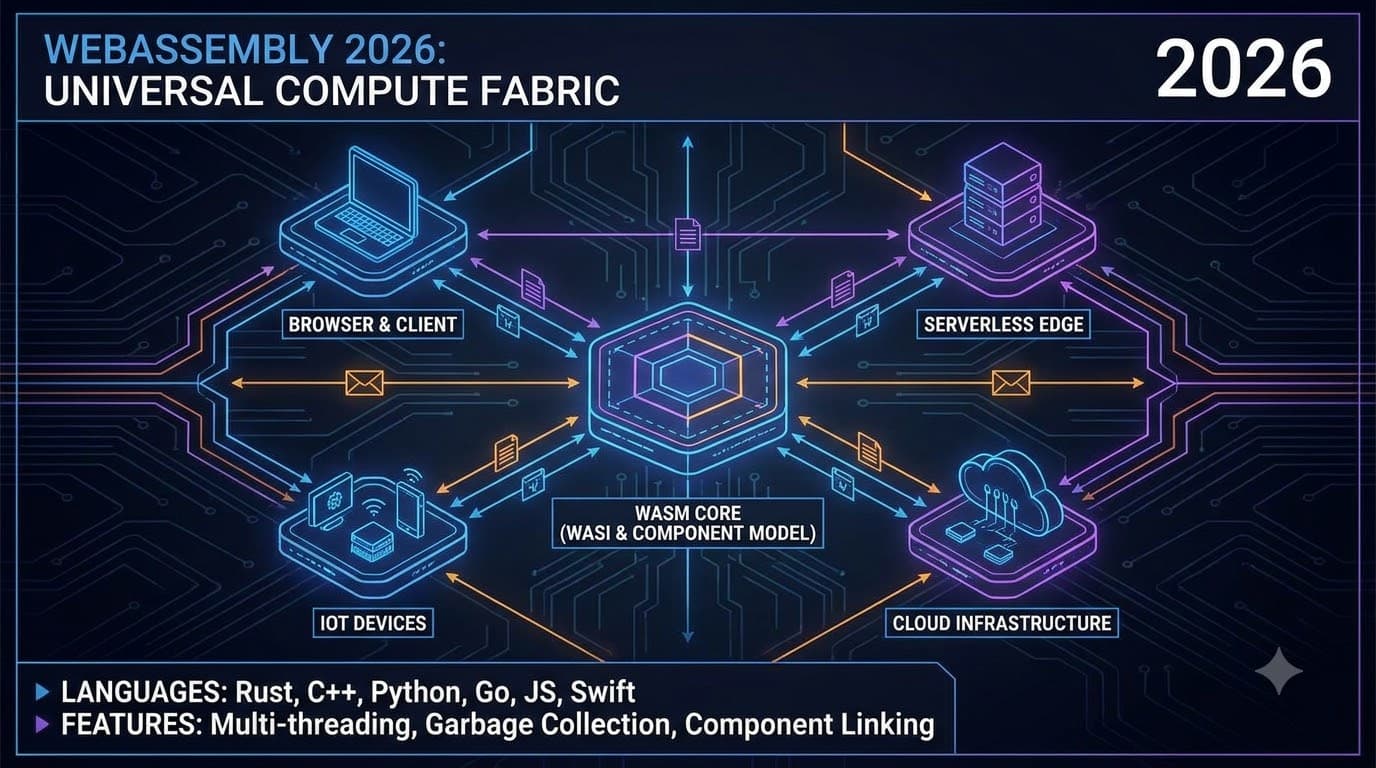
WebAssembly in 2026: The Universal Runtime
An architectural exploration of WebAssembly across cloud, browser, and edge in 2026: WASI preview 2, Component Model, and high-performance microservices.
Read more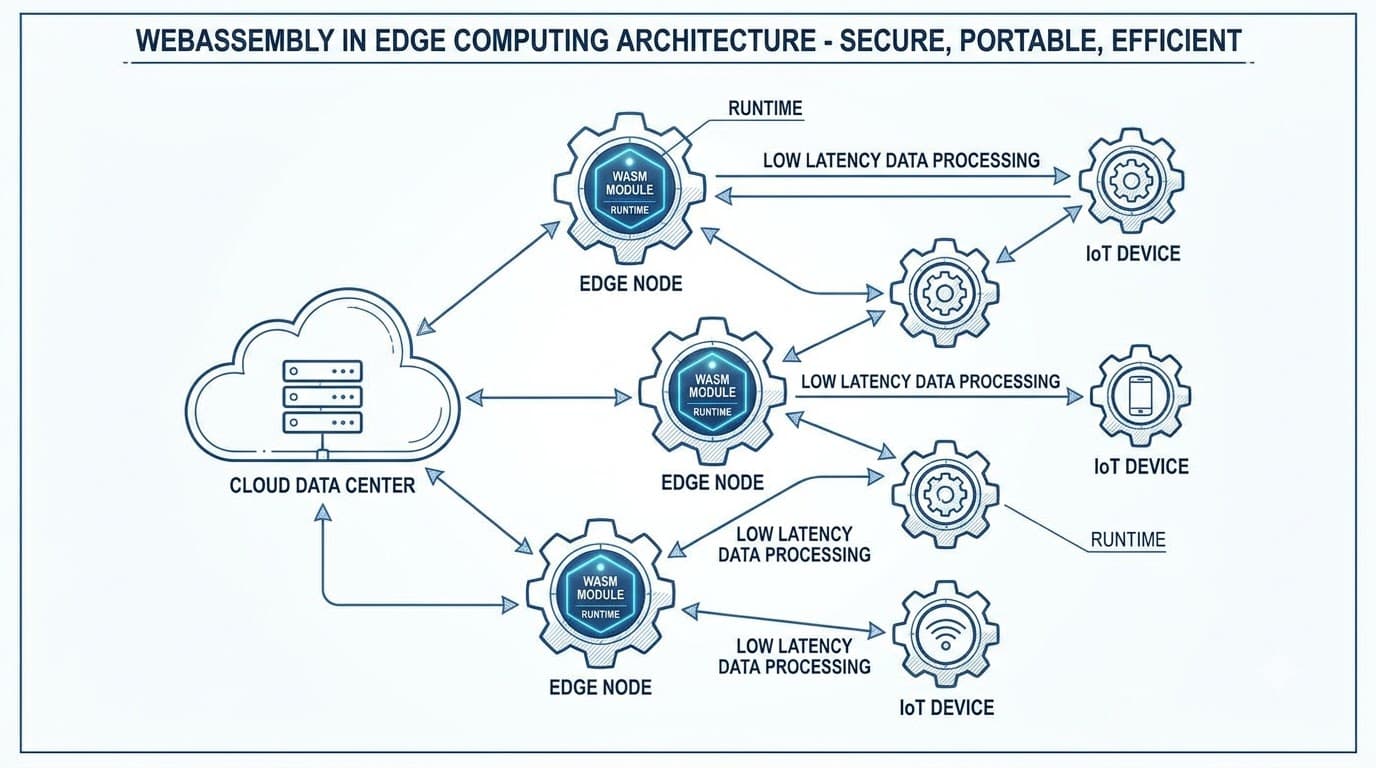
The Future of WebAssembly in Edge Computing: Architecture, WASI 0.2, and Benchmarks
Exploring how WebAssembly (Wasm) and WASI 0.2 are redefining edge computing with microsecond cold starts, capability-based security, and Rust components.
Read more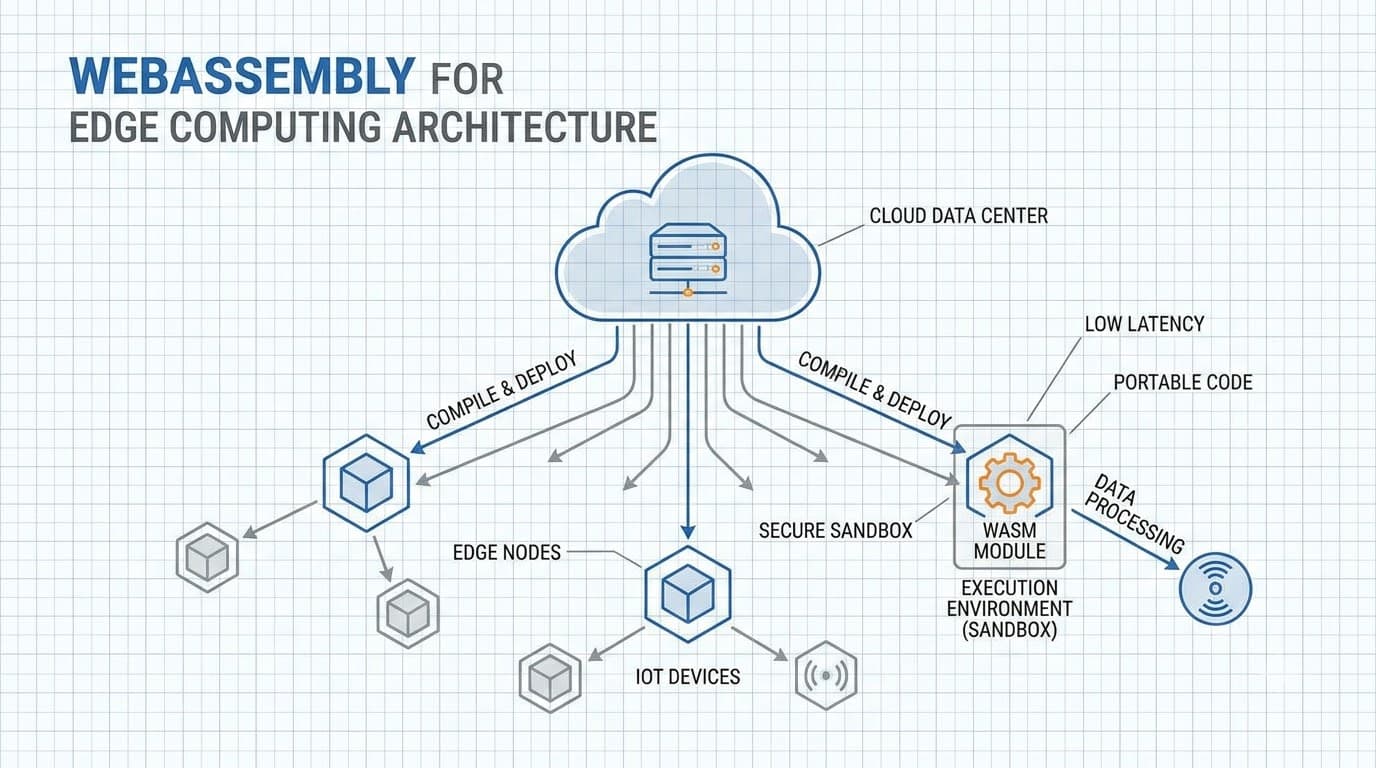
Why WebAssembly is the Future of Edge Computing
Discover how WebAssembly (Wasm) is revolutionizing the edge computing landscape, bringing near-instant cold starts, exceptional performance, and robust security to serverless applications.
Read more