The Future of WebAssembly in Edge Computing
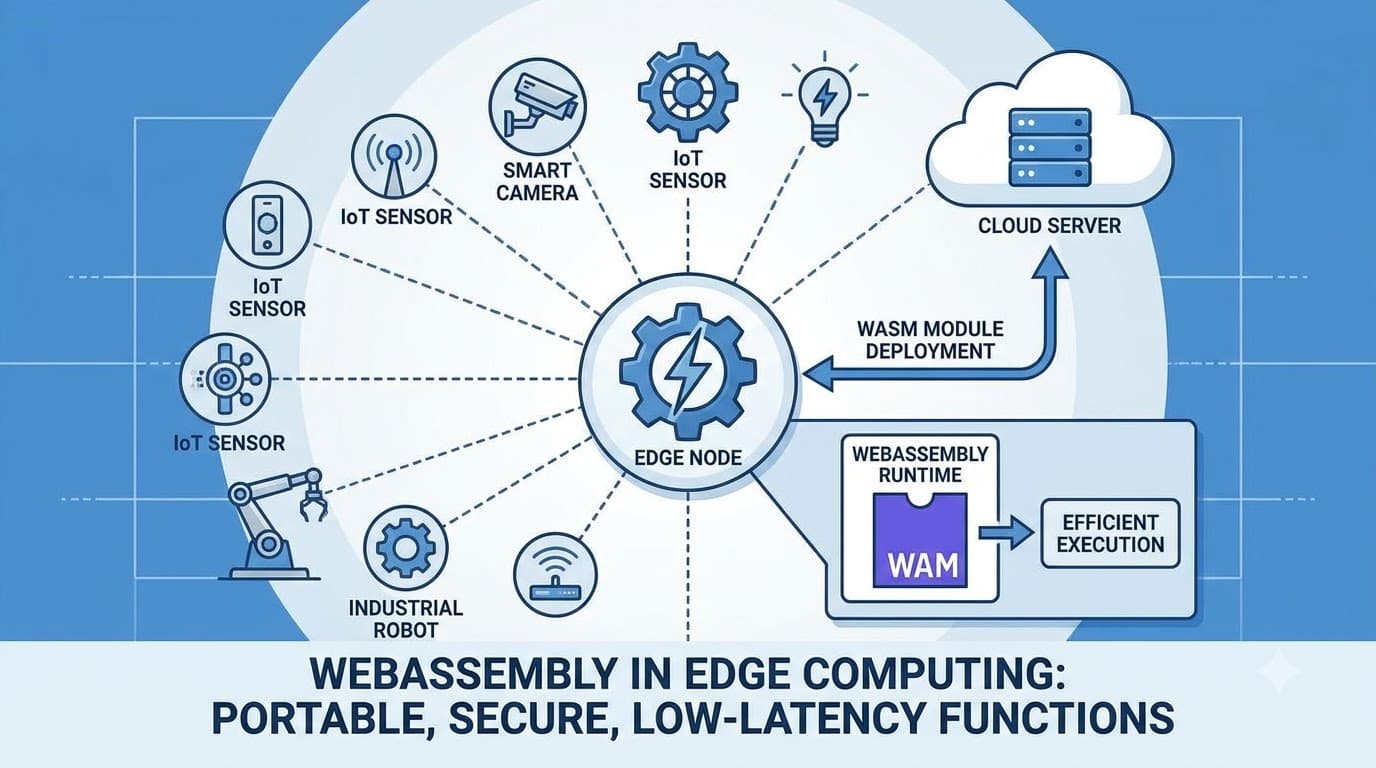

Table of Contents
WebAssembly (Wasm) has steadily grown from its initial roots as a browser-centric technology into a versatile execution environment capable of running virtually anywhere. One of the most exciting frontiers for WebAssembly today is edge computing. As organizations seek to deliver lower latency, higher security, and more efficient serverless workloads, Wasm has emerged as the ideal candidate to power the next generation of edge infrastructure.
What is Edge Computing?
To understand the impact of WebAssembly, we first need to define edge computing. Traditionally, cloud computing relies on centralized data centers to process and store information. While this model is highly scalable, it introduces latency because data must travel back and forth between the user and the data center.
Edge computing moves processing power closer to the user—or the "edge" of the network. This could mean running code on a CDN node, a 5G cell tower, or even an IoT device. By processing data locally or at nearby nodes, edge computing drastically reduces latency, conserves bandwidth, and improves reliability.
Enter WebAssembly
WebAssembly is a binary instruction format designed as a portable compilation target for programming languages like C, C++, Rust, and Go. It allows code written in these languages to run on the web at near-native speed. However, its design principles—portability, security, and performance—make it equally suited for environments outside the browser.
1. Lightning-Fast Startup Times
One of the primary challenges of traditional serverless computing (like AWS Lambda) is the "cold start" problem. When a function is invoked, the provider must spin up a container or virtual machine (VM) to run the code. This process can take anywhere from hundreds of milliseconds to several seconds, which is unacceptable for latency-sensitive applications.
WebAssembly, on the other hand, does not require a full OS or a heavy container runtime. A Wasm module can be instantiated in microseconds. This near-instant startup time makes Wasm perfectly suited for edge computing, where functions are often short-lived and must respond immediately to user requests.
2. Uncompromised Security
Security is a major concern at the edge, where code from various tenants often runs on the same physical hardware. Traditional VMs and containers provide isolation, but they come with significant overhead.
WebAssembly executes code in a memory-safe, sandboxed environment. By default, a Wasm module cannot access the host operating system, the file system, or the network unless explicitly granted permission. The WebAssembly System Interface (WASI) standardizes how Wasm modules interact with the host system, ensuring that security policies are strictly enforced. This capability allows edge providers to run untrusted code safely and efficiently without the heavy footprint of a VM.
3. True Portability
Edge environments are incredibly diverse. A piece of code might need to run on an x86 server in a CDN, an ARM processor in a router, or a custom chip in an IoT device. Compiling and maintaining software for multiple architectures is a logistical nightmare.
WebAssembly solves this by being entirely platform-agnostic. You compile your code once to Wasm, and it runs anywhere there is a Wasm runtime (such as Wasmtime or Wasmer). This "write once, run anywhere" philosophy empowers developers to deploy workloads across heterogeneous edge networks seamlessly.
4. Language Agnosticism
While JavaScript and Node.js have dominated edge runtimes (like Cloudflare Workers), they aren't the best fit for every problem. Tasks requiring heavy computation—like image processing, machine learning, or complex data manipulation—are often better suited for languages like Rust, C++, or Go.
WebAssembly bridges this gap by allowing developers to write edge functions in their preferred language. As long as the language can compile to Wasm, it can run at the edge. This flexibility is unlocking new use cases that were previously impractical or impossible with JavaScript alone.
Real-World Applications
So, what does WebAssembly at the edge look like in practice? Here are a few examples:
- Content Delivery Networks (CDNs): Providers like Cloudflare and Fastly are already leveraging WebAssembly to run custom logic on their edge nodes. This allows customers to modify HTTP requests and responses, implement custom routing, and perform A/B testing with virtually zero latency.
- IoT and Smart Devices: In the IoT space, resources are often constrained. Wasm's small footprint and security sandbox make it ideal for running firmware updates or custom logic on devices like smart thermostats or industrial sensors.
- Microservices and Serverless: Startups like Fermyon are building entirely new cloud platforms based on WebAssembly. Their tools, such as Spin, allow developers to build and deploy microservices that start in milliseconds and scale instantly.
The Challenges Ahead
Despite its immense potential, WebAssembly at the edge is still evolving, and several challenges remain:
- The WASI Standard: While WASI is making great strides, it is still a work in progress. Crucial features like networking (sockets) and threading are not yet fully standardized across all runtimes. This limits the types of applications that can be built today.
- Language Support: Although C, C++, and Rust have excellent Wasm support, other languages (like Python, Ruby, and Java) are still catching up. Improving the tooling and performance for these languages is essential for broader adoption.
- Observability and Debugging: Debugging WebAssembly outside the browser can be difficult. The ecosystem needs better tools for tracing, logging, and monitoring Wasm modules running in production edge environments.
Conclusion
WebAssembly is poised to become the standard runtime for edge computing. Its combination of microsecond startup times, robust security, and unparalleled portability directly addresses the limitations of containers and VMs. As the WASI standard matures and more languages improve their compilation targets, we will see a massive shift toward Wasm-powered edge infrastructure.
For developers, the message is clear: if you are building the next generation of low-latency, highly scalable applications, it is time to start experimenting with WebAssembly. The edge is calling, and Wasm is the answer.
You Might Also Like
Free In-Browser Developer Tools
Clean AI CLI logs, build cron expressions, decode JWTs, and calculate chmod permissions offline.
Related Articles

WebAssembly (Wasm) Beyond the Browser: A New Era of Compute
How WebAssembly is revolutionizing serverless computing: Wasmtime, WASI 0.2 components, sub-millisecond cold starts, and container replacement patterns.
Read more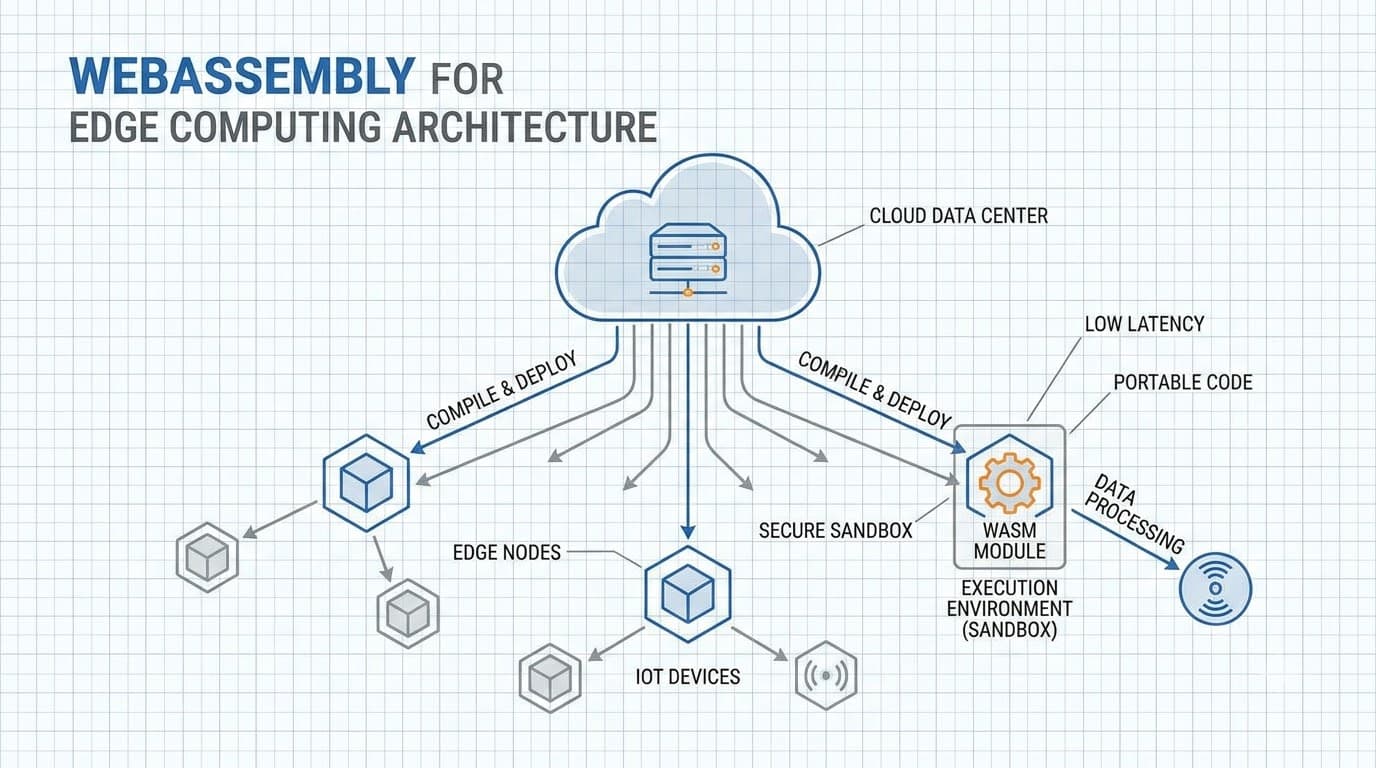
Why WebAssembly is the Future of Edge Computing
Discover how WebAssembly (Wasm) is revolutionizing the edge computing landscape, bringing near-instant cold starts, exceptional performance, and robust security to serverless applications.
Read more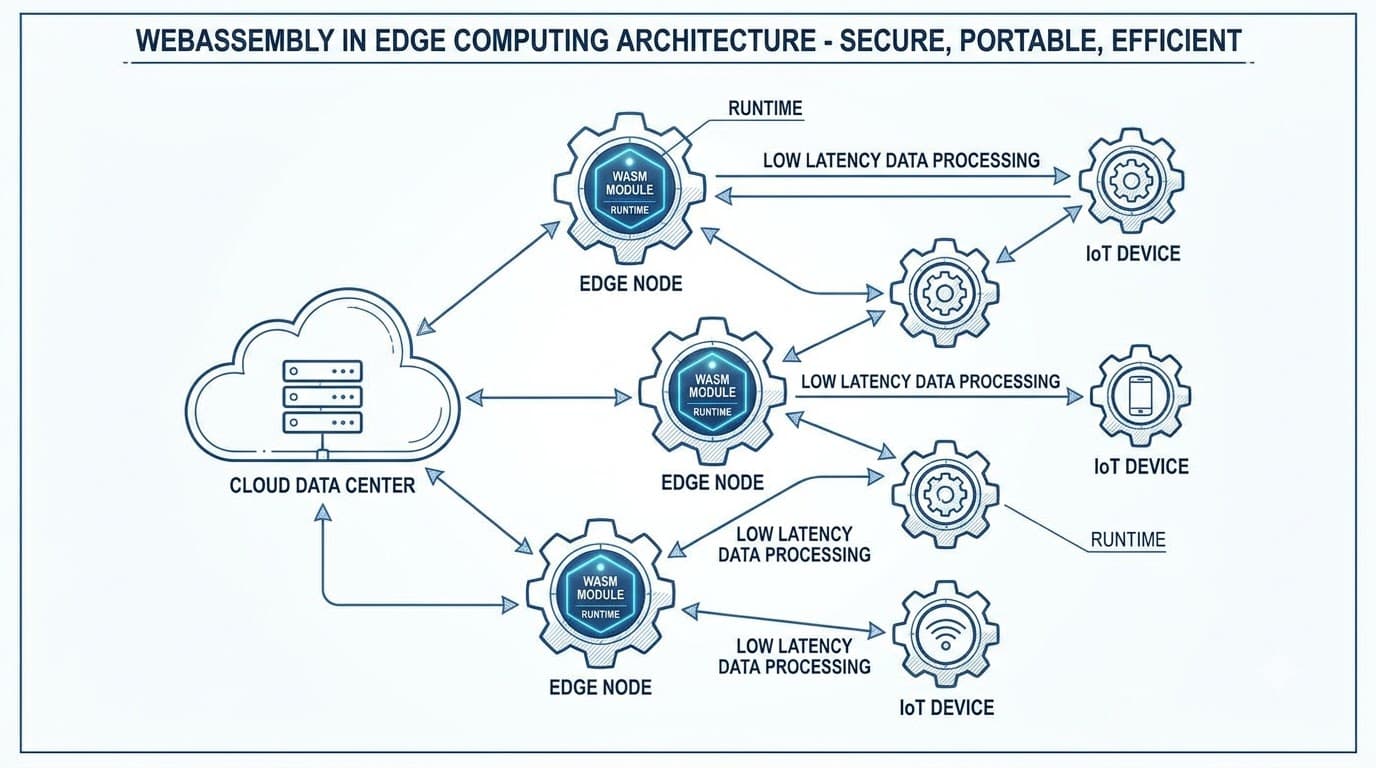
The Future of WebAssembly in Edge Computing: Architecture, WASI 0.2, and Benchmarks
Exploring how WebAssembly (Wasm) and WASI 0.2 are redefining edge computing with microsecond cold starts, capability-based security, and Rust components.
Read more