Introduction to WebAssembly
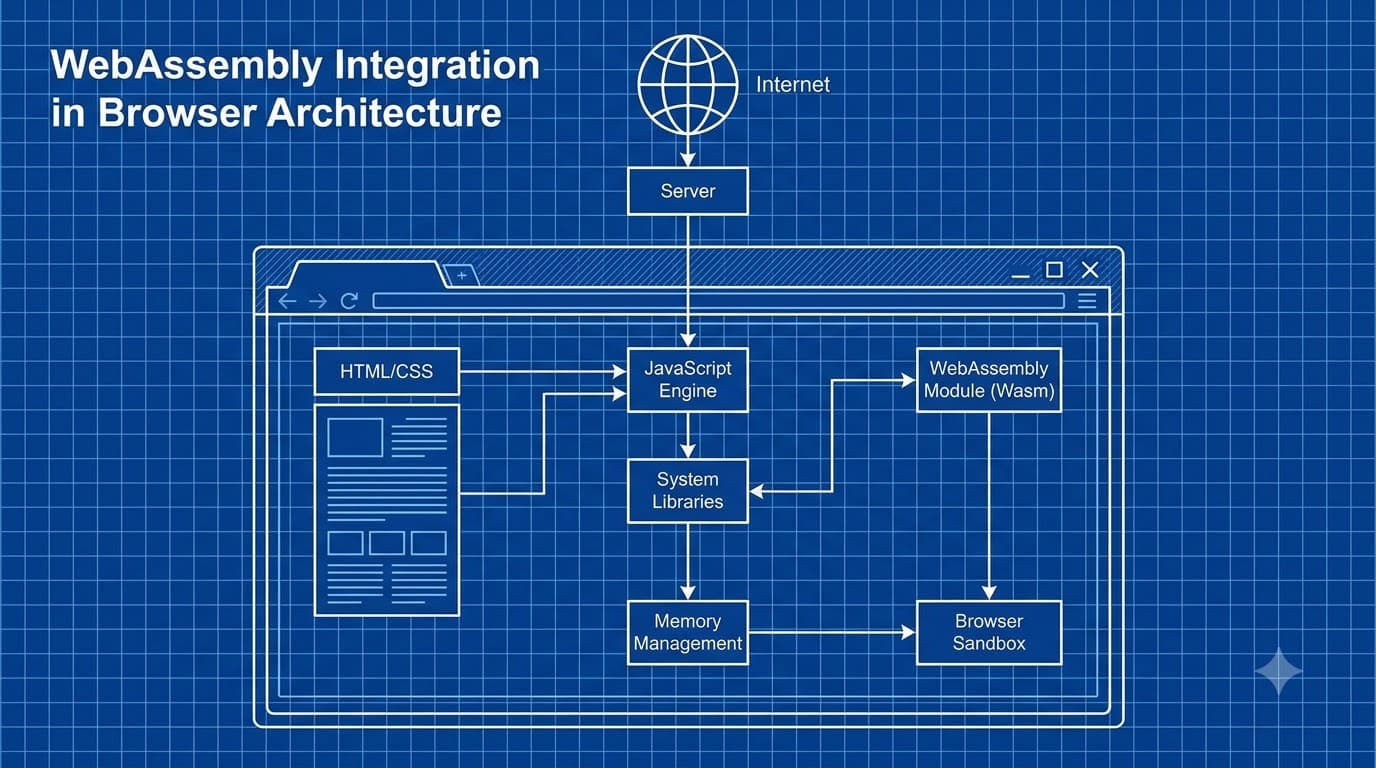

For decades, JavaScript has been the undisputed king of the web browser. It is the language that makes web pages interactive, and it has evolved significantly since its inception. However, as web applications have grown more complex, resembling full-fledged desktop applications, the limitations of JavaScript in terms of performance have become apparent. Enter WebAssembly (often abbreviated as Wasm).
WebAssembly is a relatively new technology that has taken the web development world by storm. In this post, we will explore what WebAssembly is, how it works, and why it represents a paradigm shift for the future of web applications.
What is WebAssembly?
WebAssembly is a binary instruction format for a stack-based virtual machine. It is designed as a portable compilation target for programming languages, enabling deployment on the web for client and server applications.
To put it more simply, WebAssembly allows developers to write code in languages other than JavaScript (such as C, C++, Rust, Go, and many others), compile that code into a compact binary format, and run it in the web browser at near-native speeds.
It's important to clarify that WebAssembly is not designed to replace JavaScript. Instead, it is designed to work alongside it. You can think of WebAssembly as a powerful tool in the web developer's toolbox, used for computationally intensive tasks where JavaScript might struggle.
How Does it Work?
The traditional web development workflow involves writing HTML, CSS, and JavaScript, and serving those text files directly to the browser. The browser's JavaScript engine then parses, compiles (often via Just-In-Time or JIT compilation), and executes the code.
With WebAssembly, the workflow is slightly different.
- Write Code in a Source Language: You start by writing your application logic in a language like Rust or C++.
- Compile to Wasm: Using a specialized compiler (like Emscripten for C/C++ or the built-in compiler targets for Rust and Go), you compile your source code into a
.wasmfile. This file contains the binary instructions that the WebAssembly virtual machine can understand. - Load and Execute in the Browser: You use JavaScript to fetch the
.wasmfile, instantiate it, and interact with it. The browser's WebAssembly engine executes the binary code extremely fast because it doesn't need to parse text or make runtime optimizations in the same way a JavaScript engine does.
WebAssembly modules run within a sandboxed execution environment, maintaining the security boundaries of the web browser. They can only access memory that is explicitly allocated to them and cannot directly access the Document Object Model (DOM) or browser APIs without going through JavaScript.
Why is WebAssembly Important?
The introduction of WebAssembly brings several significant benefits to web development.
1. Performance
This is the most touted benefit of WebAssembly. Because it is a low-level binary format, it can be decoded and executed much faster than JavaScript. It also provides predictable performance, which is crucial for applications like video editing, 3D gaming, CAD software, and scientific simulations. These types of applications were previously very difficult or impossible to run smoothly in a browser.
2. Portability
WebAssembly allows developers to bring existing codebases written in C, C++, or Rust to the web. This means you can take a mature, highly optimized library that was written for desktop software and use it in your web application without having to rewrite it in JavaScript. This massive ecosystem of existing code is now available to web developers.
3. Language Choice
WebAssembly frees developers from being locked into JavaScript for client-side logic. Teams can choose the best language for the job. Need maximum performance and memory safety? Write that module in Rust. Need to port a legacy application? Compile it from C++. This flexibility is a huge win for developer productivity and happiness.
Use Cases for WebAssembly
WebAssembly is not meant for simple DOM manipulation or standard UI logic; JavaScript is still the best tool for those jobs. However, Wasm shines in areas requiring heavy computation.
- Gaming: Porting complex game engines (like Unity or Unreal Engine) to the web.
- Multimedia Editing: Applications for video editing, audio processing, and image manipulation (e.g., Figma uses WebAssembly heavily).
- Emulators: Running old operating systems or consoles directly in the browser.
- Cryptography: Performing heavy cryptographic operations securely and quickly.
- AI and Machine Learning: Running machine learning models directly on the client side to reduce server load and improve privacy.
The Future of WebAssembly
While WebAssembly started in the browser, its future extends far beyond it. Projects like WASI (WebAssembly System Interface) are standardizing how WebAssembly modules interact with the operating system, allowing Wasm to run outside the browser in environments like cloud servers, edge computing nodes, and IoT devices.
This vision of a universal binary format that can run securely and efficiently anywhere—from a web browser to a backend server—is incredibly powerful.
Conclusion
WebAssembly represents a massive leap forward for web technology. By providing a fast, secure, and portable compilation target for multiple languages, it opens up the web to a whole new class of applications. As the technology matures and tooling improves, we can expect to see WebAssembly playing an increasingly central role in the architecture of modern web and cloud applications. It's an exciting time to be a developer, and WebAssembly is a big reason why.
You Might Also Like
Free In-Browser Developer Tools
Clean AI CLI logs, build cron expressions, decode JWTs, and calculate chmod permissions offline.
Related Articles

Rust for Frontend Developers: A Practical Transition Guide
Why frontend developers are increasingly adopting Rust for tooling and WebAssembly, and how you can transition your mental model from JavaScript/TypeScript.
Read more
CSS Glassmorphism in 2026: GPU Compositing, backdrop-filter & Tailwind Recipes
Frosted glass UI is everywhere. Learn how backdrop-filter leverages GPU compositing, how to bypass mobile Safari quirks, and how to craft accessible Tailwind glass designs.
Read more
WebAssembly (Wasm) Beyond the Browser: A New Era of Compute
How WebAssembly is revolutionizing serverless computing: Wasmtime, WASI 0.2 components, sub-millisecond cold starts, and container replacement patterns.
Read more