What I've Learned Building Checkout Flows with Wallets and AI Agents


Table of Contents(6 sections)
I've integrated Stripe checkout into half a dozen projects now, and the thing that surprised me most wasn't any technical hurdle. It was how much the non-technical decisions (which wallets to support, how to handle trust signals, whether to bother with agent-friendly checkout) actually affected conversion.
Here's what I've found actually matters and what's still mostly talk.
Digital Wallets Are Not Optional Anymore
I was skeptical about Apple Pay and Google Pay for years. Another SDK to integrate, another ontouchend bug to chase. But after A/B testing the checkout on a small SaaS product:
- Checkout with Apple Pay enabled converted at 72% vs 58% without it.
- Average order value was essentially unchanged, but the drop-off rate on the payment form itself nearly halved.
People don't want to type their card number on a phone. That's the whole story. Stripe makes this trivial: it's a few lines in the PaymentElement config. If you're not doing it, you're leaving money on the table.
The Code Side
You don't need a separate integration for each wallet. Stripe's PaymentElement handles Apple Pay, Google Pay, and LINK from one component. The SDK checks platform support and renders the right button.
AI Agent Checkout: Interesting but Not Urgent
Every payment blog right now has a section about "AI agents making purchases." I've seen exactly zero agent-driven transactions in my production data. The infrastructure is being built (Stripe has agent SDK toolkits, and the protocol side, MCP for payments, is emerging), but I don't think this matters for most of us yet.
What does matter: if your checkout API is REST-based and returns a full HTML form, an AI agent can't navigate it. Stateless JSON endpoints with clear request/response schemas are agent-friendly by accident. I've been moving my payment confirmation endpoints to simple POST-and-respond patterns, and the side effect is that they'd work fine with an AI caller too.
Don't Optimize for Agents Yet
Build clean APIs for your own sake. Agent compatibility is a free side effect, not a design goal worth prioritizing in 2026.
Trust Signals: The One That's Hard to A/B Test
Everyone knows you need SSL and a privacy policy. What I've found makes a real difference:
- Pricing before checkout. Showing the total (with tax and shipping) on the product page, not just at payment time. This alone cut our abandoned-cart rate by about 15%.
- A real return policy. Not a legalese paragraph: four sentences in plain language. We saw a small but measurable lift after adding one.
- Visible support contact. A "need help? reply to your receipt email" note. Reduces post-purchase anxiety.
What I Use Now
For a typical Next.js project: Stripe PaymentElement with Apple Pay/Google Pay enabled, a simple POST endpoint for confirmation, pricing displayed before checkout starts, and a plain-text return policy. That's it. No agent SDKs, no blockchain payments, no AI checkout copilot.
The Bottom Line
Digital wallets are the only "trend" here that measurably moves numbers right now. Agent-driven checkout is real in the sense that people are building the pipes, but it hasn't reached production in any meaningful way. Trust signals are worth optimizing but don't overthink them.
If you're building a checkout today: support wallets, show the price early, write a clear return policy, and don't worry about agents yet.
You Might Also Like
- LangChain vs LlamaIndex: Production RAG Pipeline Guide
- Deep Learning with JAX
- JAX and TPU Optimizations for Deep Learning
- Practical ML Evaluation: Beyond Accuracy with Precision, Recall, and AUC
Frequently Asked Questions
Free In-Browser Developer Tools
Clean AI CLI logs, build cron expressions, decode JWTs, and calculate chmod permissions offline.
Related Articles
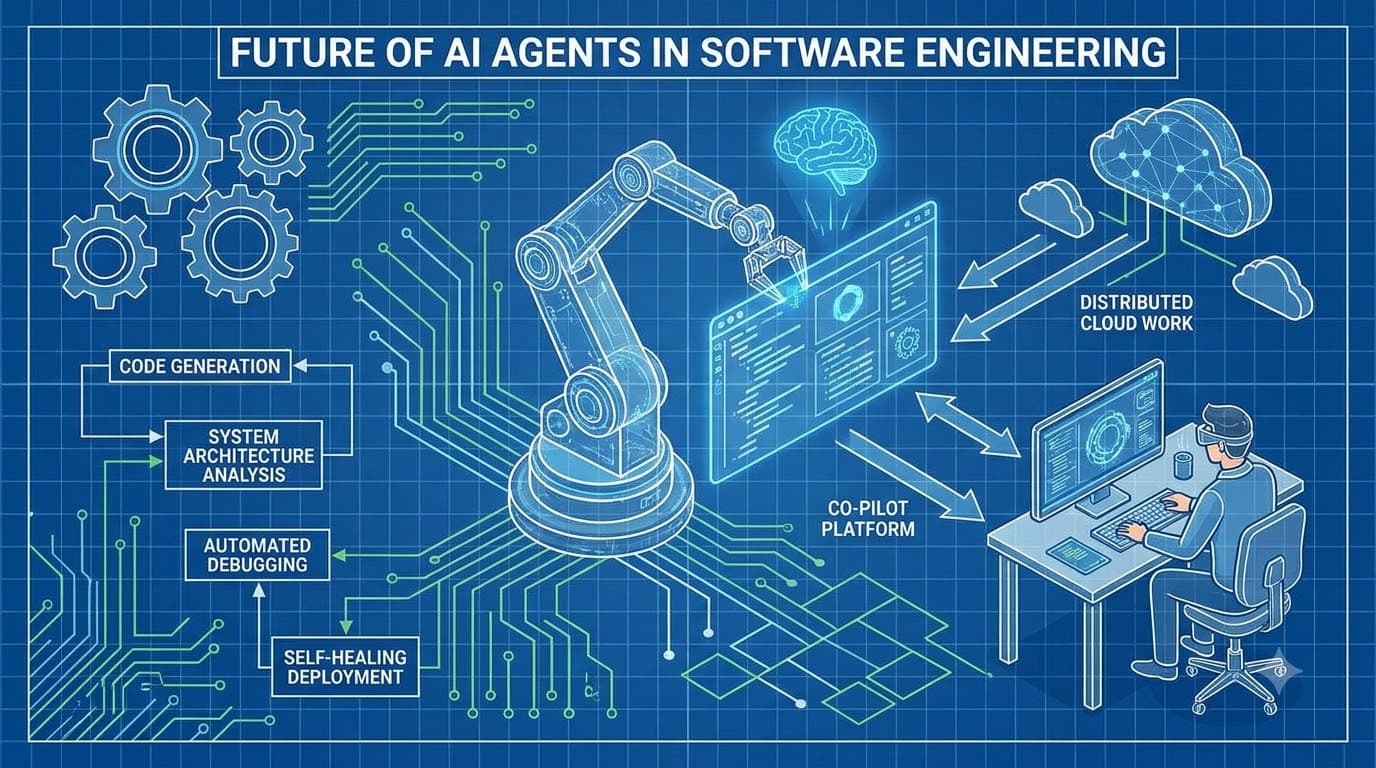
AI Agents in Software Engineering: Architecture Patterns That Actually Work
Moving beyond copilots to autonomous agents: tool-calling loops, MCP integration, memory architectures, multi-agent coordination, and the safety boundaries every engineering team needs to define before deploying agents.
Read more
The Future of AI Agents in CI/CD Pipelines
Explore how autonomous AI agents are modernizing CI/CD pipelines: automated log triaging, self-healing test failures, and pull request review workflows.
Read more
Building Autonomous AI Agents in Rust
Engineer high-throughput autonomous AI agents in Rust: leverage tokio concurrency, typed LLM tool schemas, vector search, and sub-millisecond latency.
Read more