Building Intent-Based UIs: The Future of frontend Development


Table of Contents
- The Problem with Static Route-Based Architectures
- The Intent Engine Architecture
- Implementation: Typed Contracts & Structured Outputs
- Server-Side Intent Parser with LLM Tool Calling
- Dynamic Component Registry & Runtime Assembly
- Traditional Routing vs Intent-Based UI
- Production Gotchas & Security Guardrails
- Frequently Asked Questions
- Conclusion
- You Might Also Like
The web has been static for far too long. Even with the advent of Single Page Applications (SPAs) and complex frontend frameworks, we fundamentally still build apps the same way we did two decades ago: we design static navigation paths, rigid forms, and hardcoded dashboard views, forcing users to learn our mental model to achieve their goals.
What if the UI adapted dynamically to what the user actually wants to accomplish? Instead of clicking through five nested screens to filter a dataset and export a chart, the user expresses their intent, and the client application dynamically assembles the exact interactive workspace they need.
Welcome to the architectural paradigm of Intent-Based UI Development (also known as Generative UI).
What is an Intent-Based UI?
An Intent-Based UI is an interface that dynamically resolves and renders frontend components based on natural language or contextual understanding of a user's immediate objective, powered by function-calling LLMs and strongly-typed component registries.
The Problem with Static Route-Based Architectures
In traditional client engineering, applications map URL paths directly to static view templates:
// Traditional Route Mapping
<Route path="/dashboard" element={<Dashboard />} />
<Route path="/analytics/reports/new" element={<CreateReport />} />
<Route path="/settings/billing" element={<BillingSettings />} />
While clean for simple CRUD applications, this pattern introduces severe friction as systems scale:
- High Cognitive Load: Users must remember where features reside across deeply nested navigation trees.
- Context Switching: Comparing data across two modules requires opening multiple browser tabs or navigating back and forth.
- Feature Bloat: Every new enterprise capability requires adding more sidebar items, modal dialogs, and submenus until the interface becomes unmanageable.
The Intent Engine Architecture
An Intent-Based UI replaces fixed page navigation with an Intent Resolution Pipeline. The client takes natural language or contextual gestures, translates them into structured intent payloads via an LLM, and resolves those payloads against a verified Component Registry.
1. Intent Capture
The user expresses their goal through a command palette (Cmd+K), conversational input, or contextual trigger: "Show me EU enterprise renewals expiring this month and let me draft extension quotes."
2. Structured Intent Resolution
A lightweight language model (such as Claude 3.5 Haiku or GPT-4o-mini) parses the prompt into a validated JSON schema containing actions, parameters, and suggested UI widgets.
3. Component Registry Lookup
The frontend runtime maps the intent's action tokens to lazy-loaded React components declared in a strict component manifest.
4. Dynamic Composition & Execution
The application mounts the assembled widgets inside a flexible grid workspace, synchronizing filter states across disparate components.
Implementation: Typed Contracts & Structured Outputs
To ensure system reliability, the communication between the LLM and the frontend must follow a deterministic, type-safe contract. We define this using TypeScript and Zod:
// intent-contract.ts
import { z } from 'zod';

export const IntentActionSchema = z.enum([
  'VIEW_ANALYTICS',
  'GENERATE_REPORT',
  'TRIGGER_WORKFLOW',
  'MODIFY_SETTINGS'
]);

export const IntentPayloadSchema = z.object({
  action: IntentActionSchema,
  confidence: z.number().min(0).max(1),
  parameters: z.object({
    timeRange: z.enum(['7d', '30d', '90d', '1y']).optional(),
    region: z.string().optional(),
    segment: z.string().optional(),
    metrics: z.array(z.string()).default([])
  }),
  layout: z.enum(['single-card', 'split-view', 'dashboard-grid']),
  componentManifest: z.array(z.string())
});

export type IntentPayload = z.infer<typeof IntentPayloadSchema>;
Server-Side Intent Parser with LLM Tool Calling
By utilizing structured tool calling, we guarantee that the LLM returns valid schema objects without markdown parsing anomalies:
// api/intent/route.ts
import { NextResponse } from 'next/server';
import { IntentPayloadSchema } from '@/lib/intent-contract';

export async function POST(req: Request) {
  const { prompt, userContext } = await req.json();

  const response = await fetch('https://api.anthropic.com/v1/messages', {
    method: 'POST',
    headers: {
      'x-api-key': process.env.ANTHROPIC_API_KEY!,
      'anthropic-version': '2023-06-01',
      'content-type': 'application/json'
    },
    body: JSON.stringify({
      model: 'claude-3-5-haiku-20241022',
      max_tokens: 1024,
      system: `You are an intent parser for an enterprise analytics dashboard.
Translate user requests into the UI Intent Schema. Available components:
[RevenueTrendChart, RegionalBreakdownTable, RenewalActionBar, ChurnRiskHeatmap].`,
      tools: [
        {
          name: 'render_intent_ui',
          description: 'Renders dynamic UI widgets matching user intent',
          input_schema: {
            type: 'object',
            properties: {
              action: { type: 'string', enum: ['VIEW_ANALYTICS', 'GENERATE_REPORT', 'TRIGGER_WORKFLOW'] },
              confidence: { type: 'number' },
              parameters: { type: 'object' },
              layout: { type: 'string', enum: ['single-card', 'split-view', 'dashboard-grid'] },
              componentManifest: { type: 'array', items: { type: 'string' } }
            },
            required: ['action', 'confidence', 'layout', 'componentManifest']
          }
        }
      ],
      tool_choice: { type: 'tool', name: 'render_intent_ui' },
      messages: [{ role: 'user', content: prompt }]
    })
  });

  const data = await response.json();
  const toolCall = data.content.find((c: any) => c.type === 'tool_use');
  const parsed = IntentPayloadSchema.parse(toolCall.input);

  return NextResponse.json(parsed);
}
Dynamic Component Registry & Runtime Assembly
On the client, components are registered in a central registry. We dynamically render them using React dynamic imports to prevent bloat:
// components/intent/IntentWorkspace.tsx
'use client';

import React, { Suspense } from 'react';
import dynamic from 'next/dynamic';
import type { IntentPayload } from '@/lib/intent-contract';

const ComponentRegistry: Record<string, React.ComponentType<any>> = {
  RevenueTrendChart: dynamic(() => import('@/components/charts/RevenueTrendChart')),
  RegionalBreakdownTable: dynamic(() => import('@/components/tables/RegionalBreakdownTable')),
  RenewalActionBar: dynamic(() => import('@/components/actions/RenewalActionBar')),
  ChurnRiskHeatmap: dynamic(() => import('@/components/charts/ChurnRiskHeatmap'))
};

export function IntentWorkspace({ intent }: { intent: IntentPayload }) {
  if (intent.confidence < 0.75) {
    return (
      <div className="p-6 border border-amber-300 bg-amber-50 rounded-lg">
        <p className="font-semibold text-amber-900">Intent Unclear</p>
        <p className="text-amber-700 text-sm">Did you mean to view regional revenue or renewal actions?</p>
      </div>
    );
  }

  const gridStyles = {
    'single-card': 'grid grid-cols-1',
    'split-view': 'grid grid-cols-1 lg:grid-cols-2 gap-6',
    'dashboard-grid': 'grid grid-cols-1 md:grid-cols-2 lg:grid-cols-3 gap-6'
  };

  return (
    <div className={`intent-canvas ${gridStyles[intent.layout]}`}>
      {intent.componentManifest.map((componentName) => {
        const Widget = ComponentRegistry[componentName];
        if (!Widget) return null;

        return (
          <Suspense fallback={<div className="h-64 animate-pulse bg-slate-100 rounded-lg" />} key={componentName}>
            <Widget params={intent.parameters} />
          </Suspense>
        );
      })}
    </div>
  );
}
Traditional Routing vs Intent-Based UI
| Architectural Dimension | Traditional Static Routing | Intent-Based UI (Generative) |
|---|---|---|
| Navigation Paradigm | Hierarchical URLs (/a/b/c) | Declarative Intent Descriptors |
| Component Assembly | Hardcoded page trees | Dynamically assembled at runtime |
| Learning Curve | High (user learns application layout) | Low (application adapts to user intent) |
| Latency | Instantaneous client routing (< 10ms) | Model inference latency (150–400ms) |
| Failure Modes | Broken routes (404s) | Ambiguous intent / low-confidence fallback |
| State Sharing | URL query parameters & global stores | Context-aware session parameter passing |
| Best Suited For | Static marketing pages, simple CRUD | Enterprise BI, analytics, complex SaaS |
Production Gotchas & Security Guardrails
- State Isolation: When components are mounted dynamically, avoid binding them to monolithic global stores. Pass parsed parameters through props or scoped React Context.
- Deterministic Fallbacks: If the user inputs an unrecognized query, provide one-click suggested actions instead of an empty screen.
- Destructive Actions: Never allow an intent model to automatically execute state-mutating actions (like
DELETE /customersorPOST /refund). Require explicit user confirmation dialogs before firing mutations. - Prompt Injection Defense: Validate all parameters extracted by the LLM with Zod before feeding them to database queries or API endpoints.
Frequently Asked Questions
Conclusion
The transition from rigid, pre-determined route trees to adaptive, intent-driven interfaces marks the next major frontier in web engineering. By uniting strongly typed schemas, fast reasoning models, and modular component registries, we can build software that molds itself to the user—eliminating cognitive overhead and redefining developer productivity.
You Might Also Like
Free In-Browser Developer Tools
Clean AI CLI logs, build cron expressions, decode JWTs, and calculate chmod permissions offline.
Related Articles
Next.js App Router Folder Structure: Best Practices & Enterprise Architecture (2026)
Production-tested Next.js App Router folder structure guide. Learn route groups, private folders, colocation vs FSD, and download a scalable enterprise template.
Read more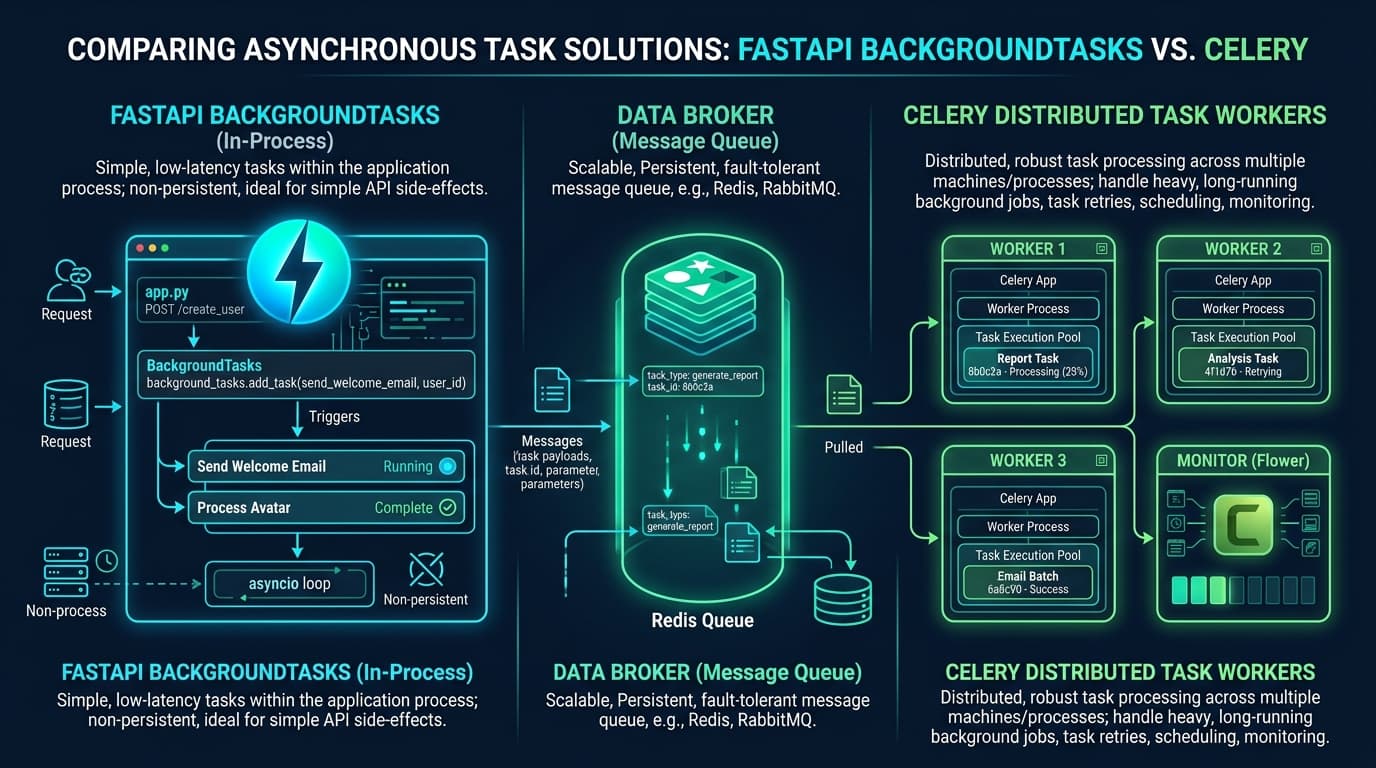
FastAPI vs Celery: When to Use BackgroundTasks vs Distributed Task Queues
FastAPI BackgroundTasks vs Celery: architectural trade-offs, event-loop blocking risks, Redis message brokers, memory benchmarks, and when to switch.
Read more
Mastering SVG in React 19: Performance, Dynamic currentColor & Bundle Optimization
Stop shipping 800kB of unused icon bloat. Master SVGs in React 19 with dynamic currentColor theming, SVG sprite sheets, forwardRef interfaces, and zero-runtime overhead.
Read more